Cantus Figuratus

Course

The White Mensural Notation of the Renaissance

Learn to perform Renaissance White Mensural Notation from original sources (Without relying on Transcription).

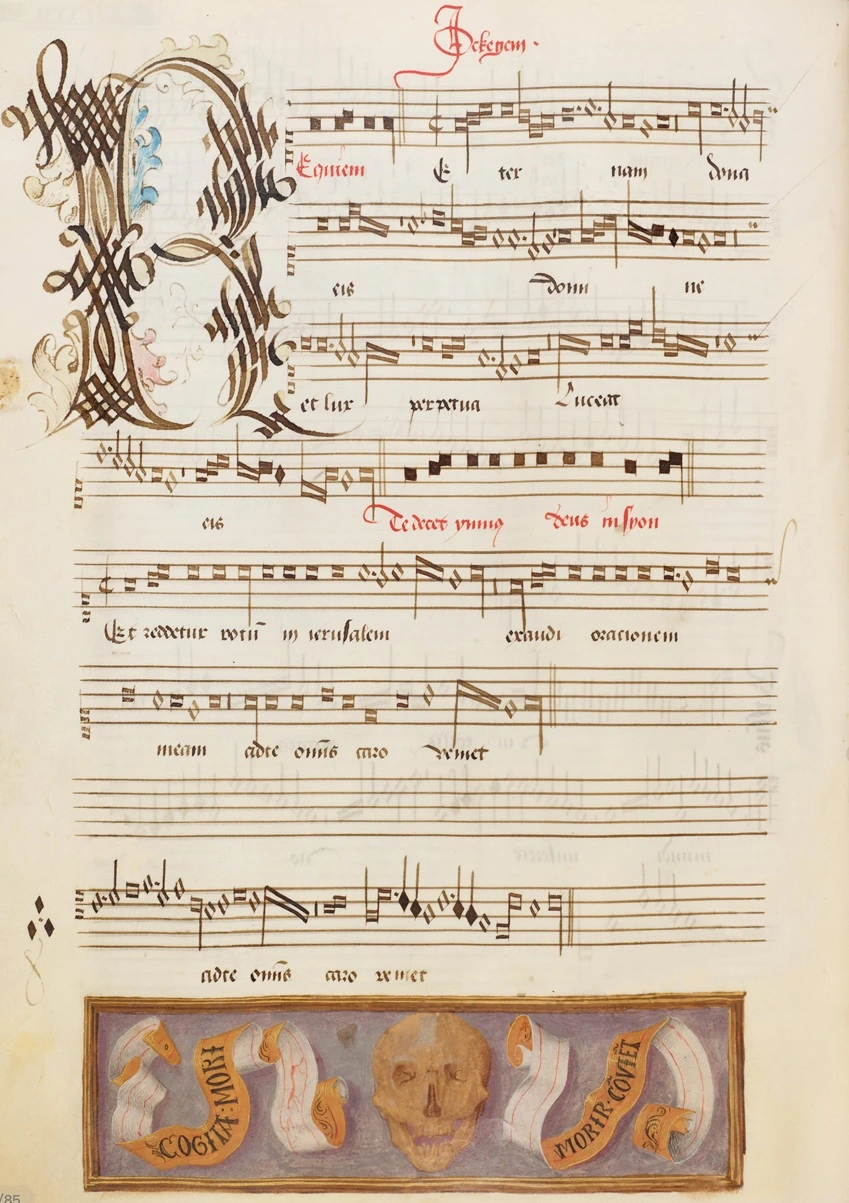
J. Ockechem, Requiem, Chigi Codex MS 288.

Renaissance White Mensural Notation is the notational system used from the early 15th century until the early 17th century.

Originally, it was called Cantus Figuratus as opposed to Cantus Firmus, since “Figuratus” means it includes various figures with different rhythmic values.

It was also known as Cantus Mensurabilis because all figures are subject to the Mensura (measure), that is, organized into groups of three or two (Mensura Perfecta and Mensura Imperfecta).

Today, White Mensural Notation is mainly studied in courses on Musicology and Music History, often with an overly static approach, aimed at creating a transcription into modern notation.

However, in the Renaissance, transcriptions did not exist, as musicians read directly from the original notation.

Therefore, the Musicus Practicus of today, who wishes to learn the authentic techniques and skills of the ancient Musici Prattici, must be able to perform (sing or play) music directly from the original sourcea, without relying on transcriptions, exactly as it was done in ancient times.

By the end of the Cantus Figuratus Course, you will be able to:

๐ŸŽต Perform Renaissance music directly from the original notation (This is the most important and primary goal).

๐ŸŽต Recognize and decode all the elements present on a handwritten or printed page from the Renaissance.

๐ŸŽต Read and identify Ligatures at a glance.

๐ŸŽต Correctly interpret the signs indicating the Mensura.

๐ŸŽต Read perfect Mensura correctly, that is, those subject to ternary grouping, knowing when a note equals 3 and when it equals 2, and mastering the rules of perfection.

๐ŸŽต Correctly associate Tactus with Mensura.

๐ŸŽต Understand proportions, hemiola, and know how to apply them correctly to Tactus and Mensura.

๐ŸŽต Perform Segni contra Segni, that is, the simultaneous presence of different Mensurae.

๐ŸŽต Place syllables to the text correctly.

๐ŸŽต Read and interpret Renaissance treatises on notation accurately.

Course Contents

Chapter 1: Figures and Rests
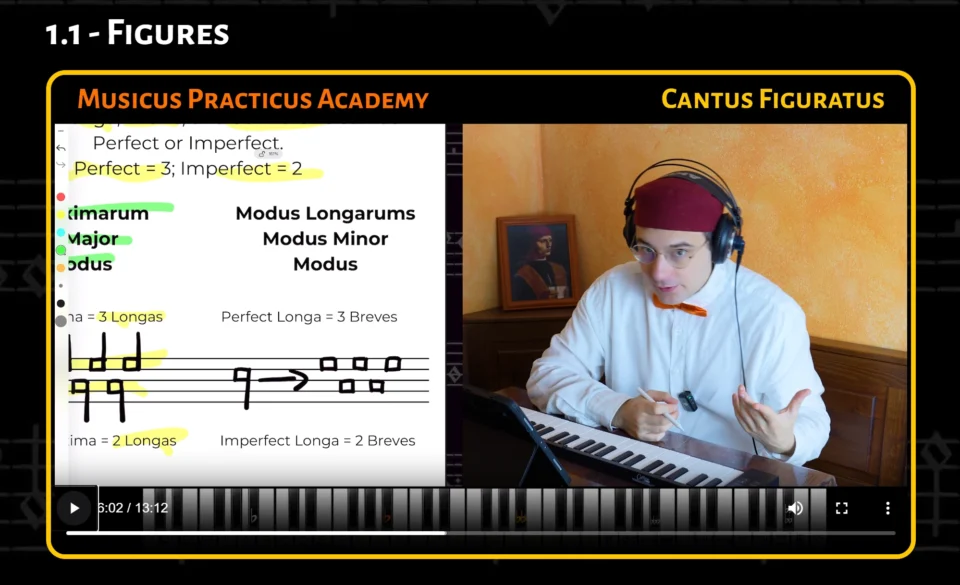
Learn the Figures and Rests of Cantus Figuratus.

Discover how certain Figures can be perfect or imperfect.

Learn to recognize all the elements on a Renaissance page.

Stages

๐ŸŽผ 1.1 – Figures
๐ŸŽผ 1.2 – Rests
๐ŸŽผ 1.3 – Practice 1: Draw the Figures
๐ŸŽผ 1.4 – Practice 2: Draw the Rests
๐ŸŽผ 1.5 – Practice 3: Decode the Figures and Rests
๐ŸŽผ Test of Chapter 5

Learn the rules for reading 2-Note Ligatures.ย 

Learn the rules for reading Ligatures with more than two notes.ย 

Challenge yourself from the very beginning by practicing with me using original sources.

Stages

๐ŸŽผ 2.1 – Ligatures
๐ŸŽผ 2.2 – 2 Note Ligatures
๐ŸŽผ 2.3 – Practice 1: Recognize
๐ŸŽผ 2.4 – Practice 2: Write
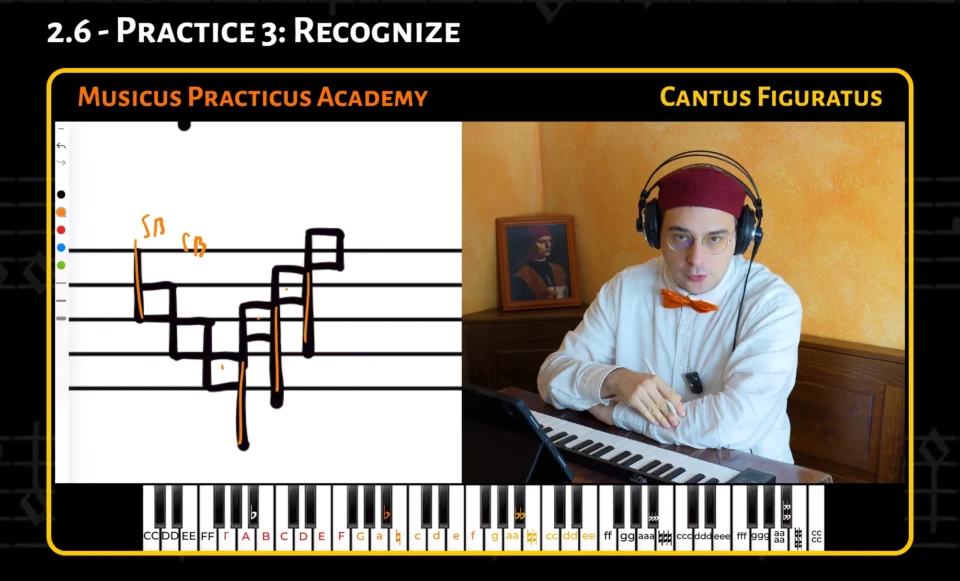
๐ŸŽผ 2.5 – More than 2 Note Ligatures
๐ŸŽผ 2.6 – Practice 3: Recognize
๐ŸŽผ 2.7 – Practice 4: Write
๐ŸŽผ 2.8 – Practice 5: Coligatio Notulari
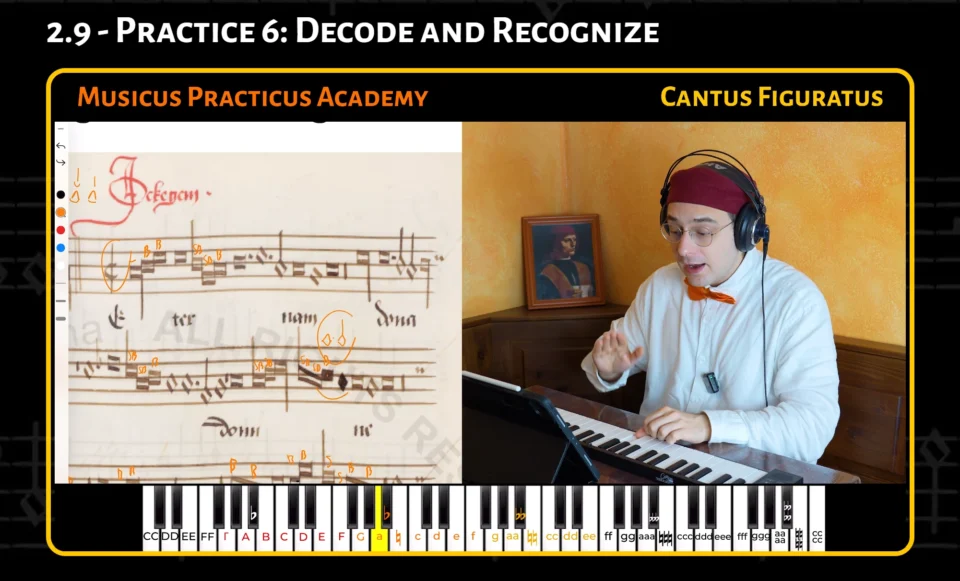
๐ŸŽผ 2.9 – Practice 6: Decode and Recognize

๐ŸŽผ Final Test for Chapter 2

Learn what Mensura is, how it works, and the rules governing Modus Maximarum, Modus Longarum, Tempus, and Prolatio.

Discover the Indicative Rests and the principle of absence indicating imperfection.ย 

Learn to distinguish between the ancient and modern systems of Mensural notation, and how to convert ancient indications to modern ones and vice versa.

Stages

๐ŸŽผ 3.1 – How Mensuration works
๐ŸŽผ 3.2 – Tempus and Prolatio
๐ŸŽผ 3.3 – Modus Maximarum and Longarum
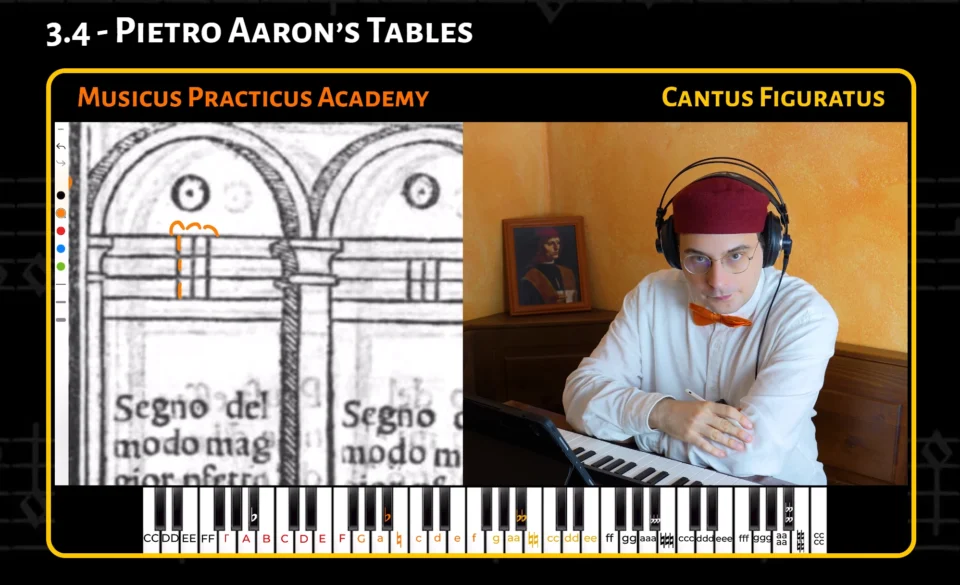
๐ŸŽผ 3.4 – Pietro Aaronโ€™s Tables
๐ŸŽผ 3.5 – Practice 1: Decode each Mensura
๐ŸŽผ 3.6 – Practice 2: Write the Mensura
๐ŸŽผ 3.7 – Ancient System of Mensuration
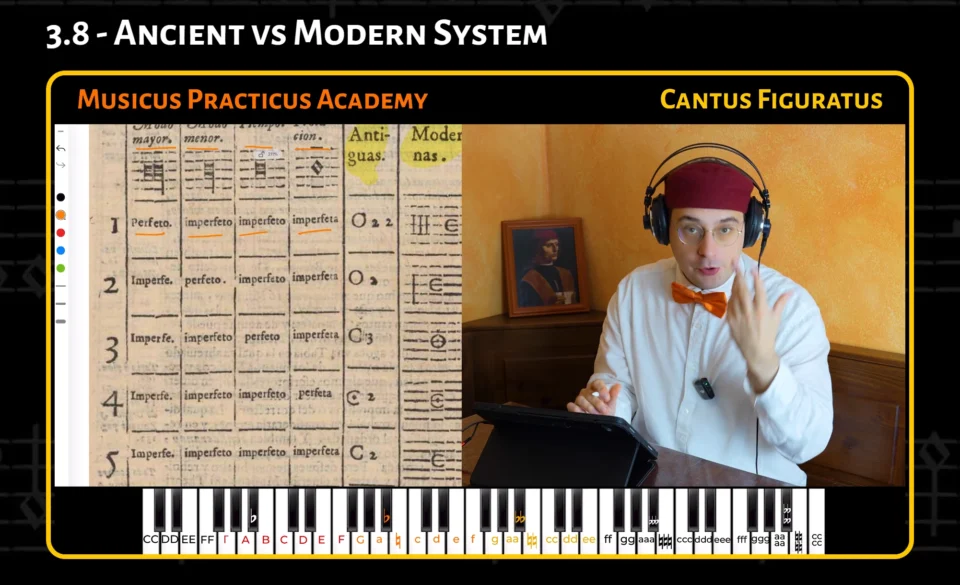
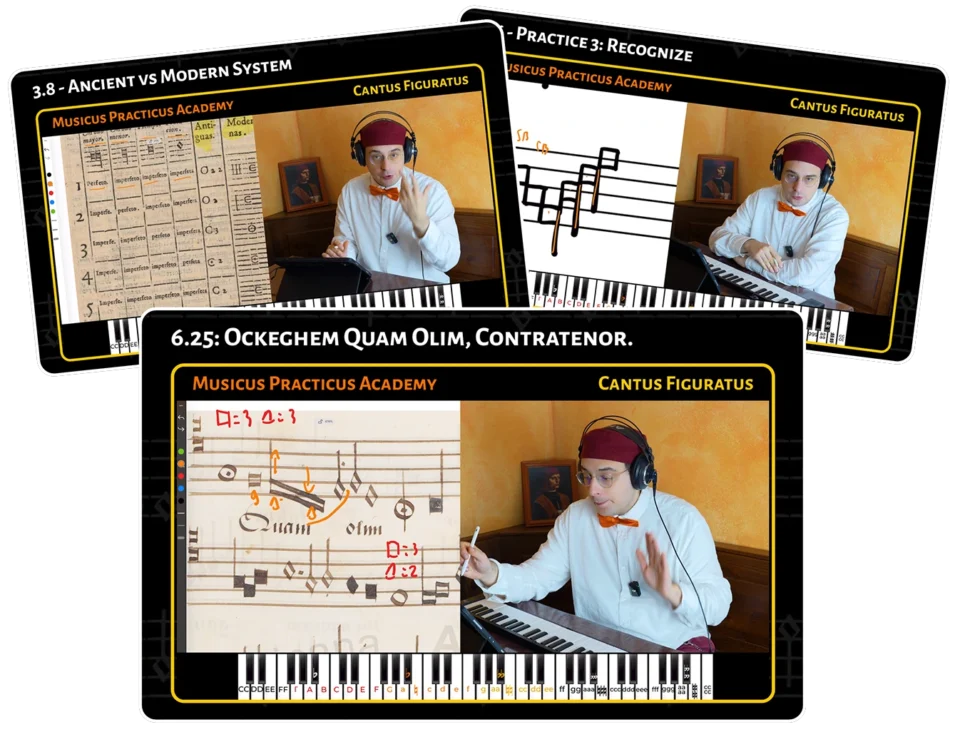
๐ŸŽผ 3.8 – Ancient vs Modern System
๐ŸŽผ 3.9 – Practice 3: Decode each Mensura
๐ŸŽผ 3.10 – Practice 4: Write the Mensura
๐ŸŽผ 3.11 – Practice 5: Convert the Mensura
๐ŸŽผ Final Test for Chapter 3

Learn to correctly beat the Tactus according to the Mensura.ย 

Discover the Misuse converted into Common Practice and how it influenced Music from the late 16th century (as revealed by Adriano Banchieri).ย 

Move directly to practice by singing or playing music from the original sources.

Stages

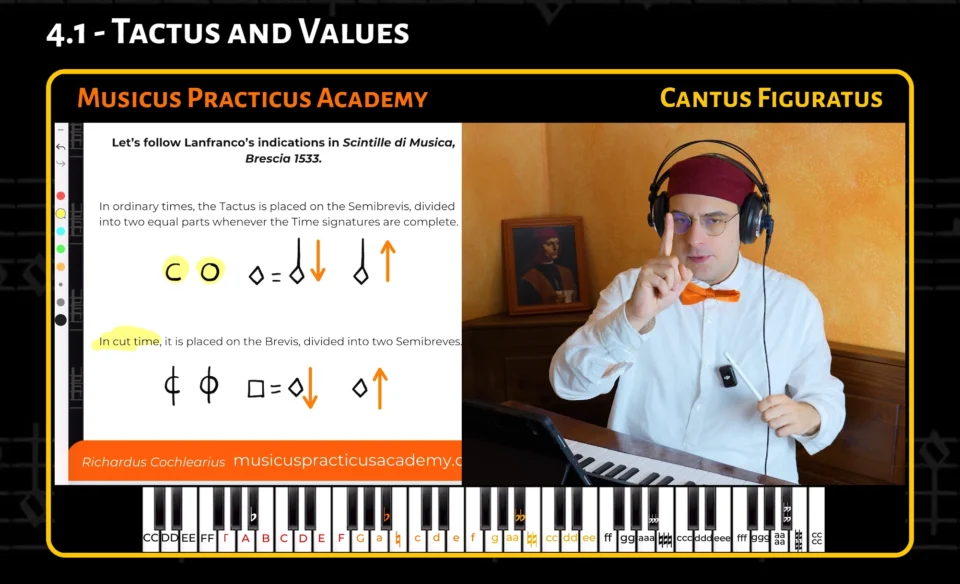
๐ŸŽผ 4.1 – Tactus and Values
๐ŸŽผ 4.2 – Misuse converted into Common Practice
๐ŸŽผ 4.3 – Practice 1: Reading Antoine de Fรฉvin
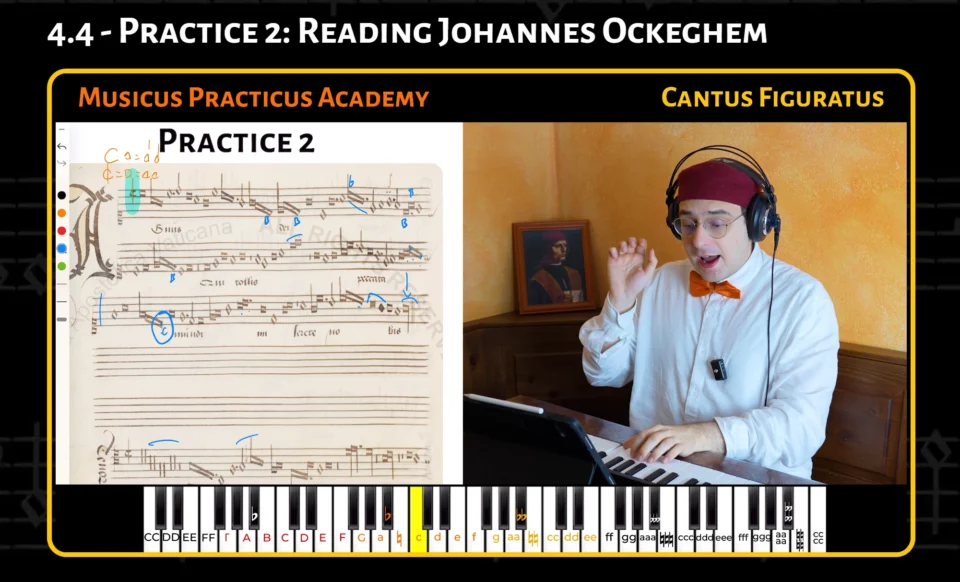
๐ŸŽผ 4.4 – Practice 2: Reading Johannes Ockeghem
๐ŸŽผ 4.5 – Practice 3: Reading Johannes Ockeghem
๐ŸŽผ 4.6 – Practice 4: Reading Hyppolito Baccusi
๐ŸŽผ Final Test for Chapter 4

Learn the Rules for reading perfect and imperfect notes: Simile ante Similem, Imperfectio a Parte Post, a Parte Ante, and much more.ย 

Discover how Alteratio can double the value of certain notes, and how Blackness can reduce it.ย 

Practice extensively with numerous exercises, singing or playing directly from the original without relying on transcription.

Stages

๐ŸŽผ 5.1 – Perfection Rules
๐ŸŽผ 5.2 – Perfection Rules, Part 2
๐ŸŽผ 5.3 – Imperferctions
๐ŸŽผ 5.4 – Alteration
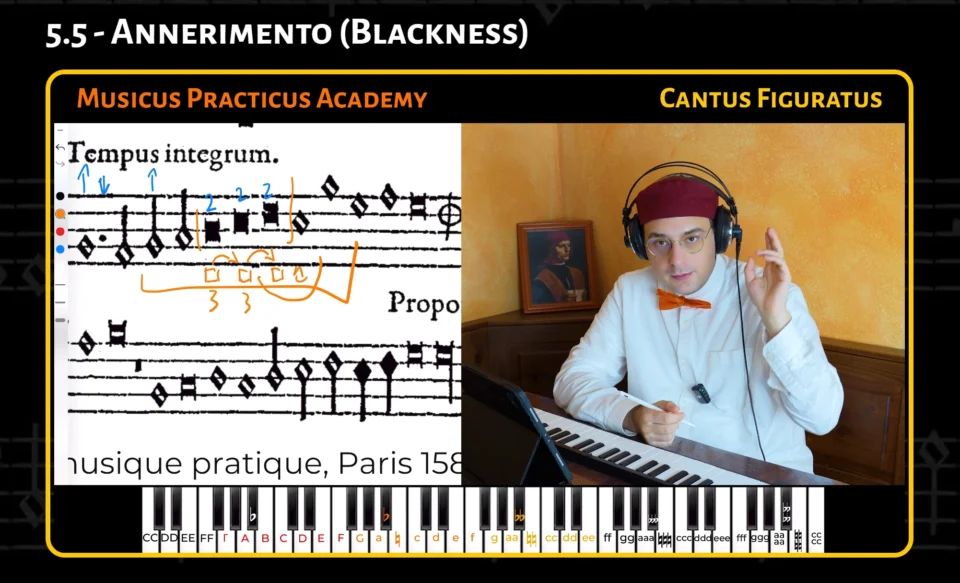
๐ŸŽผ 5.5 – Annerimento (Blackness)
๐ŸŽผ 5.6 – Punctum (Dot)
๐ŸŽผ 5.7 – Agens and Patiens
๐ŸŽผ 5.8 – The Whole and the Part
๐ŸŽผ 5.9 – Practice 1: F. Gaffurio
๐ŸŽผ 5.10 – Practice 2: F. Gaffurio
๐ŸŽผ 5.11 – Practice 3: F. Gaffurio
๐ŸŽผ 5.12 – Practice 4: F. Gaffurio
๐ŸŽผ 5.13 – Practice 5: F. Gaffurio
๐ŸŽผ 5.14 – Practice 6: F. Gaffurio
๐ŸŽผ 5.15 – Practice 7: F. Gaffurio
๐ŸŽผ 5.16 – Practice 8: F. Gaffurio
๐ŸŽผ 5.17 – Practice 9: F. Gaffurio
๐ŸŽผ 5.18 – Practice 10: F. Gaffurio
๐ŸŽผ 5.19 – Practice 11: F. Gaffurio
๐ŸŽผ 5.20 – Practice 12: F. Gaffurio
๐ŸŽผ 5.21 – Practice 13: F. Gaffurio
๐ŸŽผ 5.22 – Practice 14: F. Gaffurio
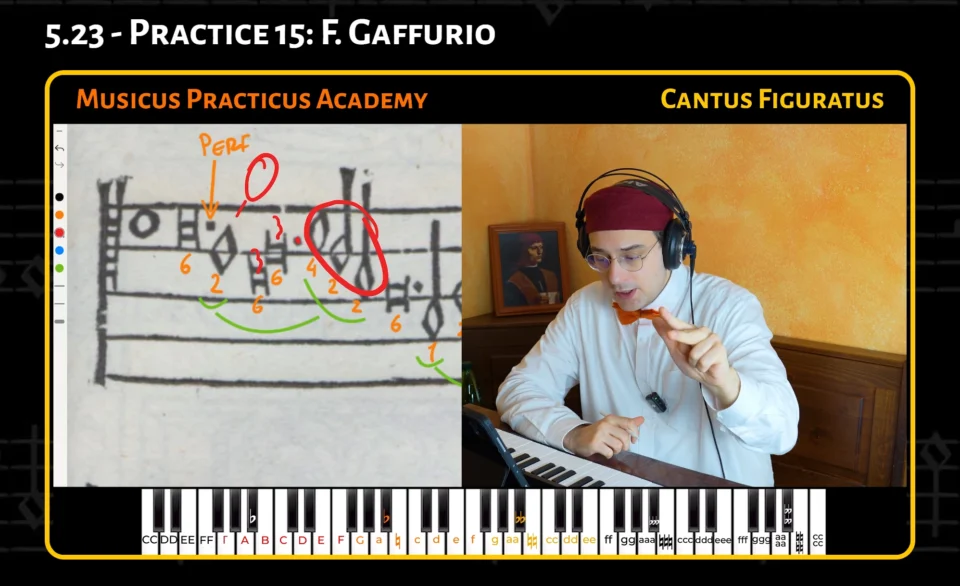
๐ŸŽผ 5.23 – Practice 15: F. Gaffurio
๐ŸŽผ 5.24 – Practice 16: 4 Fragments
๐ŸŽผ 5.25 – Practice 17: Josquin Desprez
๐ŸŽผ 5.26 – Practice 19: Palestrina
๐ŸŽผ 5.27 – Practice 20: Johannes Ockeghem
๐ŸŽผ Final Test for Chapter 5

Learn how the ancients classified the 5 Types of Proportions and Learn how to beat them in the Tactus.ย 

Discover the Hemiola and how it functions in relation to other proportions.ย 

Learn the Segni e Contra Segni, and practice with numerous practical exercises.

Stages

๐ŸŽผ 6.1 – How Proportions work
๐ŸŽผ 6.2 – Multiplex, Superparticulare, Superpartiens
๐ŸŽผ 6.3 – Multiplex Superparticulare, Multiplex Superpartiens
๐ŸŽผ 6.4 – Dupla and Subdupla
๐ŸŽผ 6.5 – Tactus Inequalis
๐ŸŽผ 6.6 – Tripla and Subtripla
๐ŸŽผ 6.7 – Quadrupla and Subquadrupla
๐ŸŽผ 6.8 – Sesquialtera and Subsesquialtera
๐ŸŽผ 6.9 – Sesquitertia and Subsesquitertia
๐ŸŽผ 6.10 – Superbipartiente terza
๐ŸŽผ 6.11 – Dupla and Subdupla Sesquialtera
๐ŸŽผ 6.12 – How to Beat (L. Penna)
๐ŸŽผ 6.13 – Dupla and Subdupla Superbipartiente terza
๐ŸŽผ 6.14 – Proportions: Tripla or Sesquialtera Maggiore and Minore
๐ŸŽผ 6.15 – Tripola Piccola, Crometta, Semicrometta
๐ŸŽผ 6.16 – Sestupla Maggiore, Minore, and Dosdupla
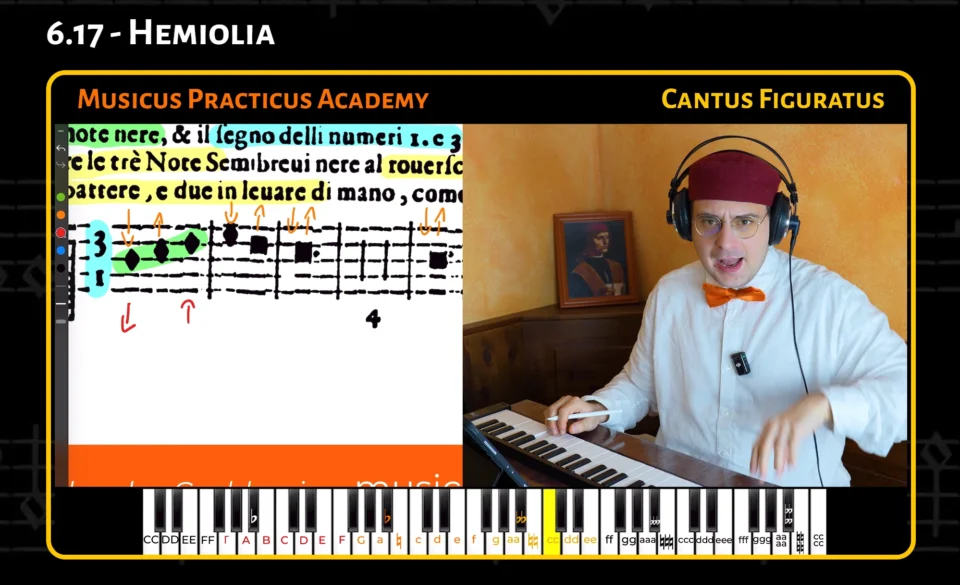
๐ŸŽผ 6.17 – Hemiolia
๐ŸŽผ 6.18 – A. Berardi, Osanna Missa Iste Confessor
๐ŸŽผ 6.19 – F. Gaffurio, O Jesu Dulcissime
๐ŸŽผ 6.20: Segni Contra Segni ยฐ
๐ŸŽผ 6.21: Semibrevis or Minima? 6.22: Conclusion for Guidance
๐ŸŽผ 6.23: Josquin Missa Sine Nomine and Lโ€™Homme Armรฉ
๐ŸŽผ 6.24: J. Ockeghem, Quam Olim
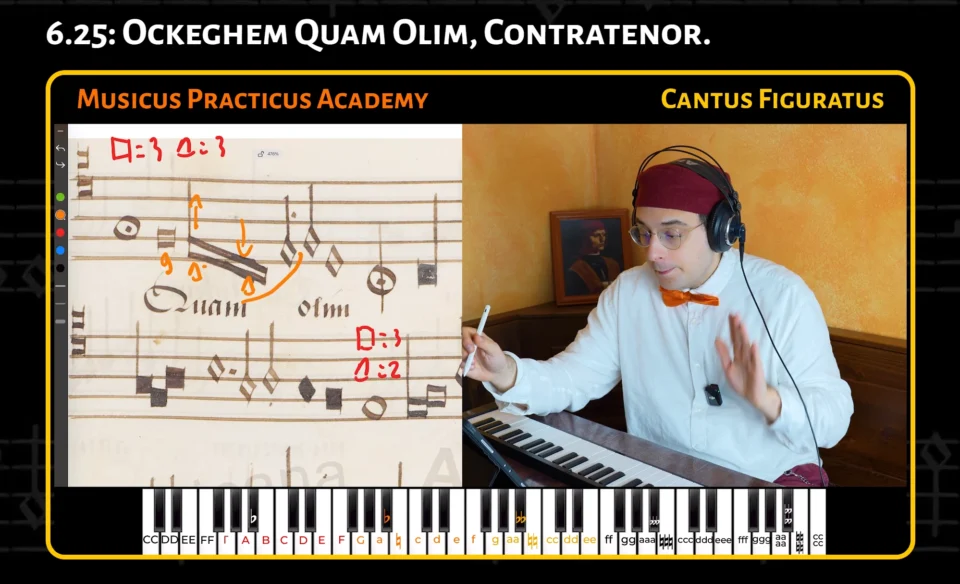
๐ŸŽผ 6.25: J. Ockeghem, Quam Olim, Contratenor
๐ŸŽผ 6.26: Crazy Example by Picerli
๐ŸŽผ 6.27: Proportions in the Late Renaissance
๐ŸŽผ Final Test for Chapter 6

Lyrical Placement (sillabazione) is the act of correctly placing syllables to a melody.ย 

Learn to do it properly by following the rules of Gioseffo Zarlino.ย 

Practice and analyze how Palestrina skillfully positioned text to notes. Learn how to correctly place syllables when there are many Semiminimas.

Stages

๐ŸŽผ 7.1 – Zarlinoโ€™s Rules 1-5
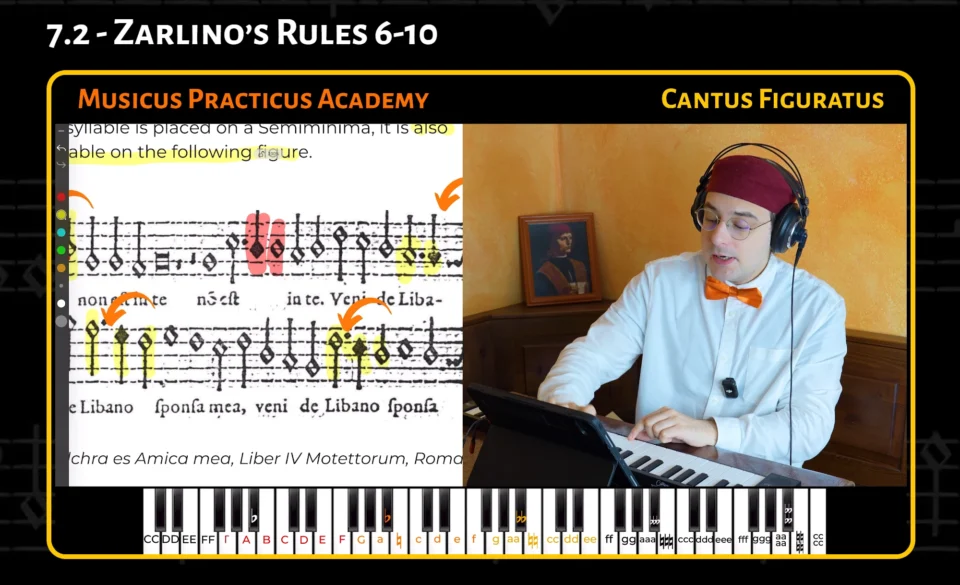
๐ŸŽผ 7.2 – Zarlinoโ€™s Rules 6-10
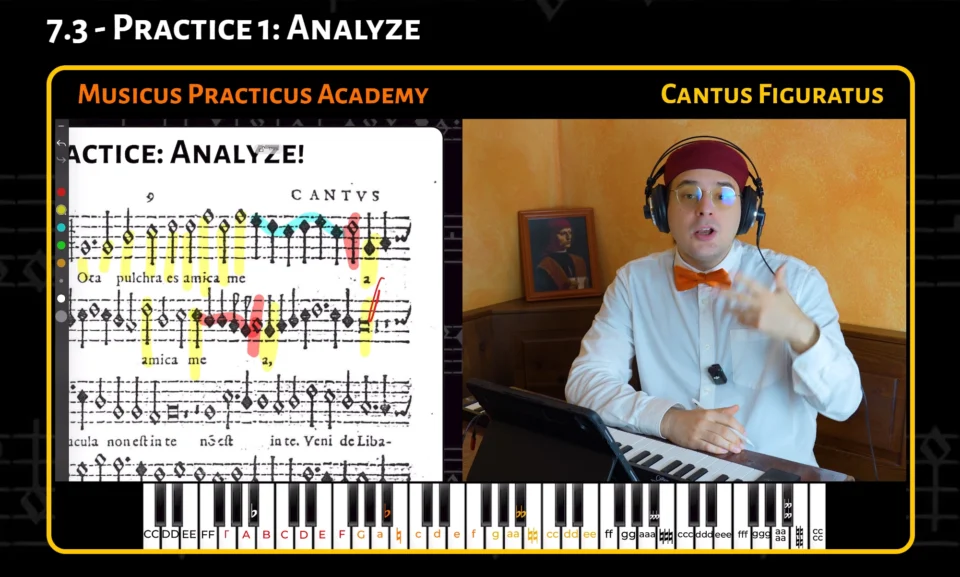
๐ŸŽผ 7.3 – Practice 1: Analyze
๐ŸŽผ 7.4 – Practice: Place Syllables
๐ŸŽผ Final Test for Chapter 7

90 Lessons

90 Stages and Video Lessons that you can watch and study anytime you want, from the online platform.

200 Pages

200 PDF pages of examples
exercises, and resources to follow the lessons, take notes, and do plenty of practice.

Questions

Comment under each stage to ask your questions and satisfy your curiosity as a Musicus Practicus.

Learn More about Cantus Figuratus!

Discover everything you will learn and preview some images weโ€™ll use to learn together!

Scroll to Top